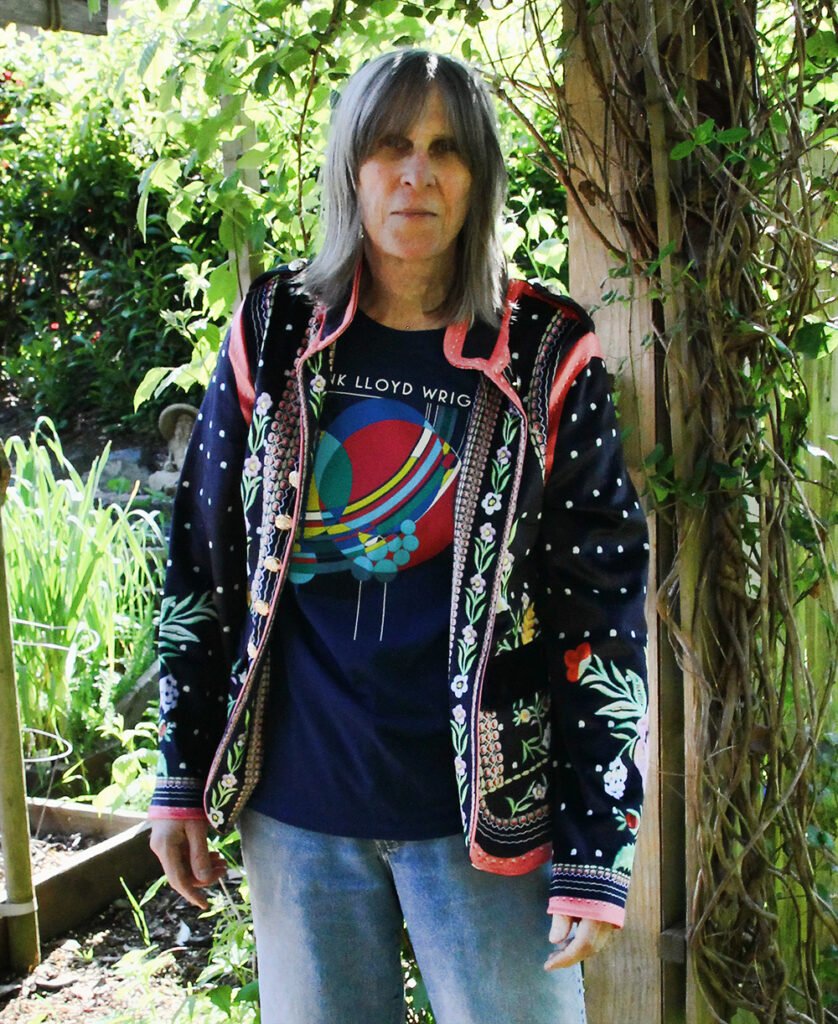
Rusty Reid has spent four albums building an impressive name as a wide-ranging indie folk-country-rock singer-songwriter. His fifth flips that restlessness toward other people's songs. Lone Stardust (Masterworks of Texas Songwriters) is a nineteen-track double-album of covers, each one written by a songwriter with ties to Texas, roughly half of them household names and half of them plucked from relative obscurity.
I love the concept, and "Alchemist," the album's second single, falls into the latter camp: a song written just five years ago by Zack Kibodeaux of the band Blue Water Highway. Rebuilt with longtime collaborator Rohit Bhusan it turns into something moodier and more ethereal than the original. And we were lucky enough to catch up with Rusty to talk about digging up overlooked "masterworks," handing his songs over to trusted players, and what he hopes the record surprises people with...
"Alchemist" is a cover rather than one of your own songs. What was it about Zack Kibodeaux's writing that made you feel, "I have to make this my next single?"
Hi Greg, happy to chat with you. As I was working on the selection process for my album, Lone Stardust (Masterworks of Texas Songwriters), I wanted to be open to discovering new "masterworks" that I had never heard before. Across my attention came this Texas band, Blue Water Highway. Their music was right up the alley of my tastes. "Alchemist" is off their album, Paper Airplanes. They did not release it as a single, but it was the song that most fascinated me. I wondered, "Can I even sing that?" But thought I'd give it a go.
I think Zack will eventually be more widely recognized as the great singer-songwriter he is.
You've worked with Rohit Bhusan before, and this track has a really moody, atmospheric feel. What did the two of you want to bring to the song that wasn't in the original?
The Blue Water Highway version is great, though more grounded in Americana. I was going for something just a tad more ethereal. Our version of "Alchemist" is essentially Rohit's vision. I gave him some ideas, but basically I'm just singing along with it. I love allowing my players to make a song "theirs," not just mine. I don't want to be stuck in my own "sound" or concepts of what a song should sound like. I like to see how better musicians would approach it.
Love that approach. I also really loved the atmosphere you created on "Alchemist." It feels both intimate and expansive at the same time. Was there a particular moment in the recording where you knew you'd captured exactly the mood you were chasing?
Not exactly. When I relinquish the essential production of a song to one of my trusted musical partners like Rohit or Daniel Ribeiro or Jason Roller or Jed Demlow or Austin Moorhead or Ronan Dempsey or Yatziv Caspi or several others, I'm not exactly sure what I'm going to get back, I just know it's going to be superb. Because we are on the same wavelength in terms of musicality and tones, it's just going to mesh.
I rarely have to ask for any revisions. I'm usually knocked out by what they come up with in the process of making my song theirs.
Covers can be tricky because people already have an emotional connection to them. How do you find the balance between respecting the original and making it unmistakably yours?
That's true. This album of songs by Texas songwriters is about half and half songs you've probably heard before and those you haven't. I didn't actually plan it that way, it's how things ended up after I narrowed down to nineteen songs, the finalists that I really wanted to record. And then, strangely enough, the album is also split almost in half with songs that fairly loyally follow the popular arrangements, and those where I take off in a different direction from the original. I just went with gut feeling: "How do I want my version to sound?" I didn't want to be different just to be different. Sometimes the arrangement of a song is what we actually love most about it, not its component parts of melody and lyrics.
So, for instance, "Only the Lonely," "Balinese," "Galveston," "Faithless Love," "Neon Moon," "I Can See Clearly Now," hew pretty tightly to the original versions. Why mess too much with near perfection? Yet these versions are not carbon-copies. The difference is my voice and our specific instrumental licks, which give these songs a recognizable but separate flavor from their progenitors.
The most radical departure from the most popular versions is probably "True Love Ways," by Buddy Holly, which Mickey Gilley also later had a big hit with. I've never been entirely in love with either version of probably Buddy's best melody. Buddy's orchestral approach is too "sweet" for my taste, while Mickey's is cool, but piano-based. I wanted a stripped-down guitar-oriented version, and Jason Roller just knocked it out of the park. Meanwhile, I thought Kacey Musgrave's version of "Oh, What a World" was too gimmicky. So it was Jason, again, who calmed it down yet kept the inspiring, almost surreal, vibe for our version.
It's "Alchemist" is just one stop on a nineteen-song journey. If listeners enjoy this single, what do you hope surprises them most when they hear the full album?
Great question. While some of the songs on my album go back over sixty years, one thing I've tried to emphasize, that some reviewers have missed, is that this album is in no way, shape or form a survey of the scope of Texas music. Like Texas itself, there has always been a broad range of songwriting and playing going on in Texas. I'm sampling a tiny slice of the pop-country-rock genres, but not broaching other genres for which Texas is known for: blues (well, there's "Balinese" on this album), soul, jazz, Latino, big band, western swing, hard rock, punk rock, classical, classic country, the list goes on.
Still, I think listeners will enjoy the variety that is represented on this album, the changes in tone and tempo and temperament, and the emotional roller-coaster ride that we take along the journey. These truly are "masterworks" of songwriting. These are "songwriter's songwriters." The four main criteria for the selections were melody, lyrics with gravitas, a compelling theme, and malleability into an interesting soundscape. If your musical tastes lean in those directions, you'll probably enjoy this album. If you prefer a certain "sameness" in your ear, as is quite prevalent these days, this may not be your cup of tea.
It's was a real treat to hear about more from Rusty, and his thought process in recording the album. Thanks Rusty! Check out the single to get started, it's a great track.
Check him out on Instagram below.